Isopropyl Alcohol: What PPE Do You Need?
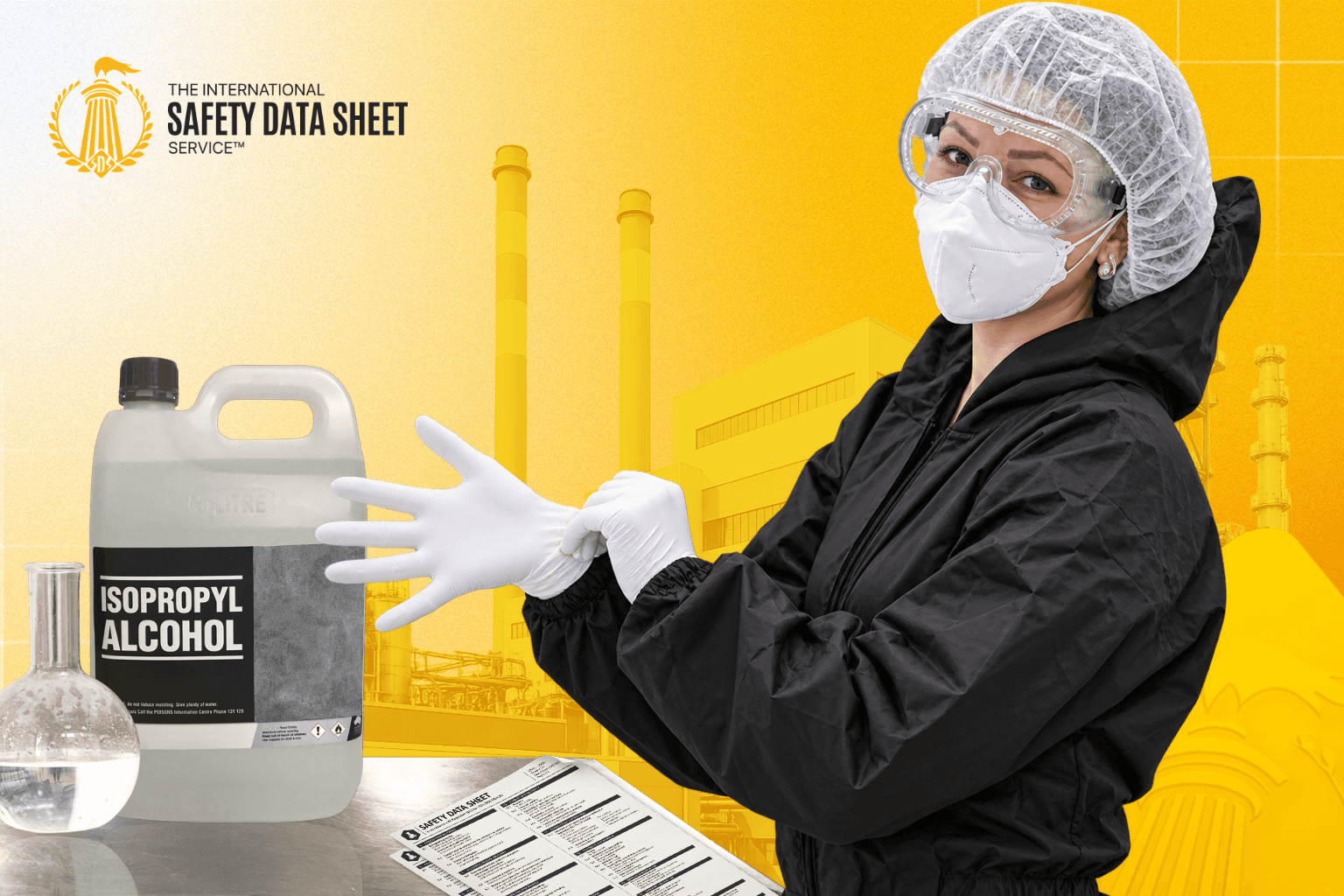
For most work with isopropyl alcohol, PPE means eye protection and the right gloves, with respiratory protection only where ventilation cannot keep the vapour down. Which glove is right is a question for the SDS and the glove maker, not the word “nitrile”.
For most work with isopropyl alcohol (IPA), the PPE that matters is eye protection and suitable gloves. Respiratory protection is only needed where ventilation cannot keep the vapour at a safe level. The detail that catches people out is the glove: three real IPA SDSs all name the same glove material, but give very different answers about how long it lasts.
Why IPA needs any PPE
Isopropyl alcohol has a legally binding entry on HSE’s GB mandatory classification list: highly flammable liquid and vapour (H225), causes serious eye irritation (H319), and may cause drowsiness or dizziness (H336). The flammability and vapour hazards are covered in Isopropyl Alcohol: Why Is It Dangerous?, and they shape most of the controls. The eye hazard is the main reason for PPE.
IPA is not classified as a skin hazard, but that does not mean skin contact is harmless. UKHSA’s isopropanol compendium reports that skin contact can cause tingling, redness and contact dermatitis, and that eye exposure causes immediate stinging, burning and watering, with corneal injury possible at higher concentrations. UKHSA adds that prolonged skin contact can cause effects similar to swallowing it, such as headache, dizziness and drowsiness.
PPE comes last
Under COSHH regulation 7, PPE is the final step in the order of control. Employers must first use suitable work processes and engineering controls, then control exposure at source, including ventilation. PPE is provided only where adequate control cannot be achieved by those means, and in addition to them, not instead of them.
Where PPE is needed, the PPE at Work Regulations require the employer to provide it free of charge, maintain and replace it, and give workers enough information, instruction and training to use it. Since April 2022 those duties also cover limb (b) workers, typically casual or irregular workers who are not self-employed. PPE is chosen after a suitability assessment, and COSHH adds that it must be suitable for the purpose and meet any legal requirements that apply to it.
Eye protection
Because IPA is an eye irritant, all three SDSs we checked recommend eye protection. Two specify safety eyewear to EN 166, and one adds a face shield. Section 8 of your SDS states what the supplier recommends for its product.
Gloves: the SDSs disagree
All three SDSs recommend nitrile gloves. That is where the agreement ends.
- One gives 0.4 mm nitrile for full contact, with a breakthrough time of 480 minutes, and 0.2 mm nitrile for splash contact, with 60 minutes.
- Another also gives nitrile of at least 0.4 mm, but rates its permeation at Level 1, under 10 minutes, and says the exact breakthrough time must come from the glove manufacturer.
- The third names nitrile without a thickness and says the breakthrough time should be longer than the total time the product is used, with gloves changed partway through longer tasks.
Neither figure is necessarily wrong. Breakthrough times are measured for specific glove products, and the first SDS names the glove models it tested. A nitrile glove from a different maker is a different product with its own data.
HSE’s guidance on choosing gloves states that no glove material protects against all substances, and no glove protects against a specific substance forever. HSE advises basing selection on the glove manufacturer’s data, choosing a low permeation rate, and, for mixtures, starting from the ingredient with the shortest breakthrough time. That last point matters for IPA, because it is often one ingredient among several in cleaners, wipes and degreasers. HSE also advises avoiding natural rubber latex gloves unless no other glove gives the protection needed, because some people develop a latex allergy, and its solvents leaflet warns never to use solvents to clean paint or grease off skin, which applies to IPA as much as any other solvent.
So use the SDS to choose the material, then check the breakthrough time for the actual glove you buy against how long and how heavily it will be in contact with IPA.
Gloves can also cause the contamination they are meant to prevent if they are taken off badly. HSE provides guidance on removing gloves without contaminating your hands, and advises rinsing reusable gloves before removing them where practical. HSE also publishes a skin checks poster for spotting early signs of dermatitis, which UKHSA reports as an effect of IPA skin contact.
Respiratory protection
The SDSs we checked recommend respiratory protection only where ventilation is insufficient or a risk assessment shows it is needed. They specify a type A filter. HSE’s RPE guidance, HSG53, describes type A filters as protecting against organic gases and vapours with a boiling point above 65°C, which includes IPA. HSG53 is also clear that RPE should only be used after all other reasonably practicable measures to prevent or control exposure have been taken. It rates each type of RPE by an assigned protection factor (4, 10, 20, 40, 200 or 2000) and advises choosing one above the level of protection your assessment shows is needed.
Tight-fitting masks must be fit tested. HSE explains that RPE cannot protect the wearer if it leaks, that no single facepiece will fit everyone, and that fit testing should be done by a competent person when the RPE is first selected. Whether RPE is needed at all is an exposure question, judged against IPA’s workplace exposure limits, covered in the Week 1 article. HSE notes that air monitoring can be a useful indicator of whether the controls already in place are working.
Clothing and static
HSE’s solvents leaflet lists aprons alongside gloves, goggles and face shields as PPE to wear where necessary. IPA is also highly flammable, so the SDSs look beyond splash protection. One recommends flame-retardant, antistatic protective clothing. The others place their static precautions in Section 7 instead, such as earthed equipment and non-sparking tools. Read Sections 7 and 8 together.
What to check on your IPA SDS
- Section 8.2, hand protection: the glove material, thickness and breakthrough time, and whether the figures are for splash or full contact.
- Section 8.2, eye protection: the type of eyewear and the standard it should meet.
- Section 8.2, respiratory protection: the filter type and when the supplier says it is needed.
- Section 7: static precautions and handling controls that sit alongside the PPE.
- The revision date. One SDS we checked dated from 2013 and still cited directives that have since been replaced, so ask the supplier for the current version.
Our guide to Section 8 explains how to read the exposure controls in more detail. The PPE you choose, and the reasons for it, belong in your COSHH risk assessment, together with the ventilation and other controls that come first.
Frequently Asked Questions
What gloves should I use with isopropyl alcohol?
The SDSs we checked recommend nitrile, but their breakthrough times range from under 10 minutes to 480 minutes. Check the glove manufacturer’s data for the glove you actually use.
Do I need a respirator for isopropyl alcohol?
Usually only where ventilation cannot keep exposure below the workplace exposure limits. Where RPE is needed, the SDSs specify a type A filter, and tight-fitting masks must be fit tested.
Is eye protection needed for isopropyl alcohol?
Yes. IPA is classified as causing serious eye irritation (H319), and the SDSs we checked all recommend eye protection, typically safety eyewear to EN 166.
Are thin disposable gloves enough for IPA?
For splashes, possibly. One SDS gives 0.2 mm nitrile with a 60-minute breakthrough time for splash contact only. Longer or heavier contact needs a glove rated for it.
Who pays for PPE?
The employer. PPE needed for work must be provided free of charge, maintained and replaced. Since April 2022 this also covers limb (b) workers.
You Might Also Find Useful
Free SDS and Chemical Risk Assessments
Search more than 1.5 million Safety Data Sheets and linked Chemical Risk Assessments.
- ✓ Search by substance, product, or manufacturer
- ✓ Save documents to your library
- ✓ Register free in under two minutes