GHS Hazard Pictograms Explained: All 9 Symbols
There are nine GHS hazard pictograms in current use. Each black symbol inside a red-bordered diamond represents a different category of chemical risk.
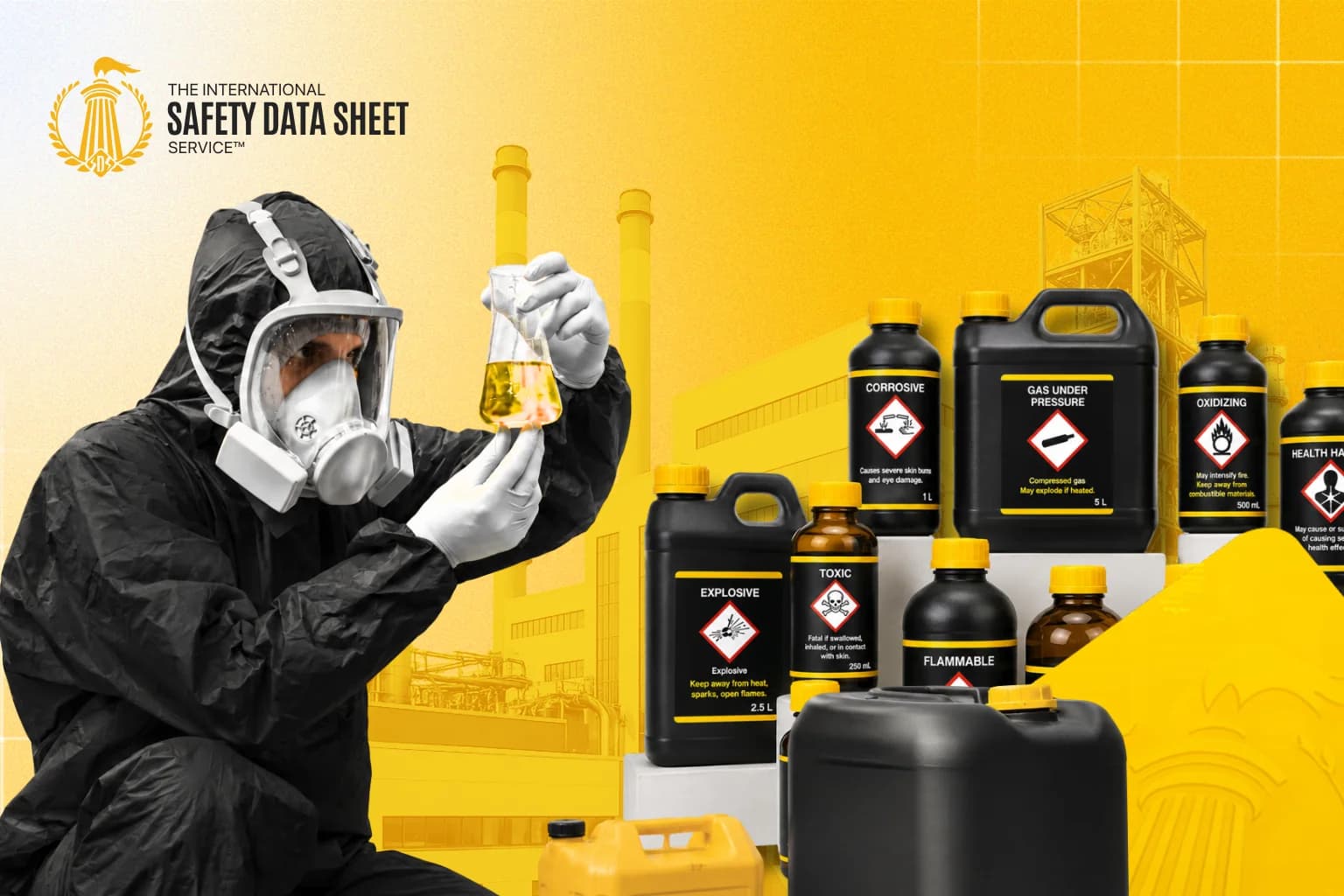
They cover nine categories of risk: explosive, flammable, oxidising, gas under pressure, corrosive, acute toxicity, harmful or irritant, serious health hazard, and environmental damage. You will often see one or more of them together on a product label or in Section 2 of a Safety Data Sheet.
Recognising them at a glance is one of the fastest ways to understand what you are dealing with, well before you have time to read a full SDS. Below is what each one actually means, and a few things worth knowing about how they get assigned.
Why Do Hazard Pictograms All Look the Same Shape?
Every GHS pictogram uses the identical visual format on purpose: a white background, a red diamond border, and a black icon in the centre. That consistency is the entire point of the Globally Harmonized System (GHS), the international standard implemented in Great Britain through the GB CLP Regulation. It means a worker does not need to read a word of any language to recognise a hazard category, since the shape and colour scheme stay fixed no matter which symbol sits inside it.
The 9 GHS Hazard Pictograms and What Each Means
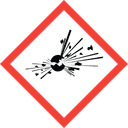
Explosive
Marks substances or mixtures that can explode under specific conditions, such as impact, friction, heat, or contact with other substances. It is found on fireworks, certain industrial chemicals, and some self-reactive substances. These chemicals require specialised storage and handling procedures.

Flammable
Indicates a substance that catches fire easily. It covers flammable liquids, gases, aerosols, solids, and self-heating substances. Products such as acetone, ethanol, and petrol commonly display this symbol. It is one of the pictograms most people recognise from cleaning products, solvents, and fuels.

Oxidising
Warns that a substance can cause or intensify a fire, even without being flammable itself. Concentrated hydrogen peroxide and certain pool chemicals may carry this symbol because they can make a nearby fire burn more fiercely.

Gas Under Pressure
Applied to compressed, liquefied, dissolved, or refrigerated gases. Common examples include oxygen, nitrogen, and carbon dioxide cylinders. The risk is not always chemical; it can be physical, such as a pressurised container rupturing or refrigerated gas causing cryogenic burns on contact.

Corrosive
Shows a substance that can cause severe skin burns or serious eye damage, or corrode metal surfaces. Strong acids, alkalis, and some concentrated cleaning products carry this pictogram. It is a clear signal to check the required engineering controls, handling procedures, and PPE before use.
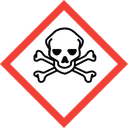
Acute Toxicity
Reserved for substances that can cause serious harm, including death, after a single or short-term exposure, whether swallowed, inhaled, or absorbed through the skin. These substances require strict handling procedures and controls that prevent exposure.

Irritant, Harmful, or Hazardous to the Ozone Layer
A broader category covering hazards such as skin or eye irritation, skin sensitisation, respiratory irritation, drowsiness, harmful acute toxicity, or damage to the ozone layer. Many cleaning chemicals display this pictogram. Its exact meaning comes from the hazard statement shown beside it, so the full label still matters.
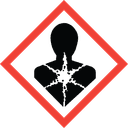
Serious Health Hazard
Covers longer-term or more serious health effects: carcinogenicity, germ-cell mutagenicity, reproductive toxicity, respiratory sensitisation, specific target organ toxicity, and aspiration hazards. Examples can include formaldehyde, benzene, and certain isocyanate-containing products, depending on their classification and concentration. Some effects may develop after repeated exposure or appear much later.

Hazardous to the Environment
Identifies substances that present acute or long-term hazards to aquatic life. Pesticides and certain industrial chemicals commonly carry this symbol. GHS implementation can vary by country; under GB CLP, the pictogram is used where the applicable aquatic hazard classification and labelling criteria require it.
Why Some Chemicals Carry More Than One Pictogram
Many hazardous substances present more than one type of risk, and a product's label reflects the applicable label elements. Concentrated ammonia, for example, may be corrosive and hazardous to aquatic life, depending on the product. A solvent might be both flammable and harmful. A strong cleaning product might be both corrosive and hazardous to the environment.
GB CLP also has precedence rules. This means a product can meet several hazard classifications without displaying a separate pictogram for every one of them, because a more severe pictogram can take precedence in some combinations. This is why it is important to read the entire chemical label and the accompanying Safety Data Sheet rather than relying on a single symbol. The pictograms provide a quick visual warning; the label and SDS contain the detail needed to handle the substance safely. The ECHA guidance on CLP labelling explains the corresponding requirements for products supplied in the EU.
Why Pictograms Can Change
Hazard classifications are not static. New evidence or a new mandatory classification can change the pictogram, signal word or hazard statements required for a substance even when its formulation has not changed. In Great Britain, legally binding entries appear in the GB Mandatory Classification and Labelling List. HSE publishes decisions and changes rather than using a single fixed update cycle.
Check the current supplier label and SDS, and use HSE's GB CLP changes page for current regulatory updates. Do not rely on an unverified future compliance date.
What to Do If a Pictogram Looks Unfamiliar or Wrong
Compare the label with Section 2 of the accompanying SDS, which lists the product's classification and label elements. Section 16 normally contains the document's revision information. If the label and SDS do not agree, or the SDS appears out of date, ask the supplier for the current information before using the product.
The label and SDS serve different parts of hazard communication, so neither should be ignored. The HSE's hazard pictogram guide shows all nine GB CLP symbols, while its Safety Data Sheet guidance explains when suppliers must provide an SDS.
Frequently Asked Questions
How many GHS hazard pictograms are there?
Nine. They cover physical hazards (explosive, flammable, oxidising, gas under pressure), health hazards (corrosive, acute toxicity, harmful or irritant, serious health hazard), and an environmental pictogram for aquatic hazards.
What does the skull and crossbones pictogram mean?
It represents acute toxicity, meaning a single or short-term exposure can cause serious harm or death. Check the hazard statement for the exposure route and severity, then follow the label, SDS, and workplace controls before handling.
Can a chemical have more than one hazard pictogram?
Yes. A single product can meet the criteria for several hazard classes. Concentrated ammonia, for example, may carry corrosion and environmental classifications depending on the product. Precedence rules can also mean that some symbols are not shown when a more severe pictogram applies.
Why do hazard pictograms sometimes change for a product that has not changed?
Regulatory classifications can be updated as new safety data emerges, even when the chemical formulation stays the same. A revised classification can change the pictogram, signal word, or hazard statements required on the label and SDS.
Can I identify all risks from the pictogram alone?
No. Hazard pictograms provide a quick visual warning but must be read with the signal word and hazard statements on the label. The SDS contains detailed information on safe handling, storage, exposure controls, emergency measures, and disposal.
You Might Also Find Useful
Free SDS and Chemical Risk Assessments
Search more than 1.5 million Safety Data Sheets and linked Chemical Risk Assessments.
- ✓ Search by substance, product, or manufacturer
- ✓ Save documents to your library
- ✓ Register free in under two minutes